Welcome to Shenzhen Rising Medical Co., Ltd.  中文
中文
中文 中文

News
Date:2026-05-25 Click: 995
Radial artery occlusion is one of the common complications after radial artery intervention surgery. Although many patients do not have obvious symptoms in a short period of time, vascular occlusion can affect subsequent radial artery intervention treatment. Proper use of radial artery compression hemostatic devices, hemostatic compression devices, and radial artery tourniquets can maintain radial artery patency while stopping bleeding after surgery, thereby reducing the risk of occlusion.
At present, more and more catheterization laboratories are paying attention to the concept of "preserving blood flow to stop bleeding", rather than just using high pressure for compression. Reasonable compression techniques combined with standardized monitoring can effectively reduce the incidence of radial artery occlusion and improve the patient's recovery experience.
Radial artery occlusion usually occurs when blood flow is interrupted for a long time after surgery. Excessive compression pressure, prolonged compression time, oversized sheath size, and insufficient anticoagulation are common reasons. Even with reliable interventional hemostatic devices, improper operation can still lead to vascular blockage.
Factors that increase the risk of radial artery occlusion include:
The core goal of postoperative compression is to preserve blood flow as much as possible while stopping bleeding. At present, many hospitals adopt the technique of "preserving blood flow to stop bleeding", which allows some blood flow to pass through the radial artery while controlling bleeding.
Using a radial artery tourniquet with adjustable pressure design helps doctors to more accurately control the compression force. Compared to traditional manual compression, the instrument compression method provides more stable pressure and reduces human error.
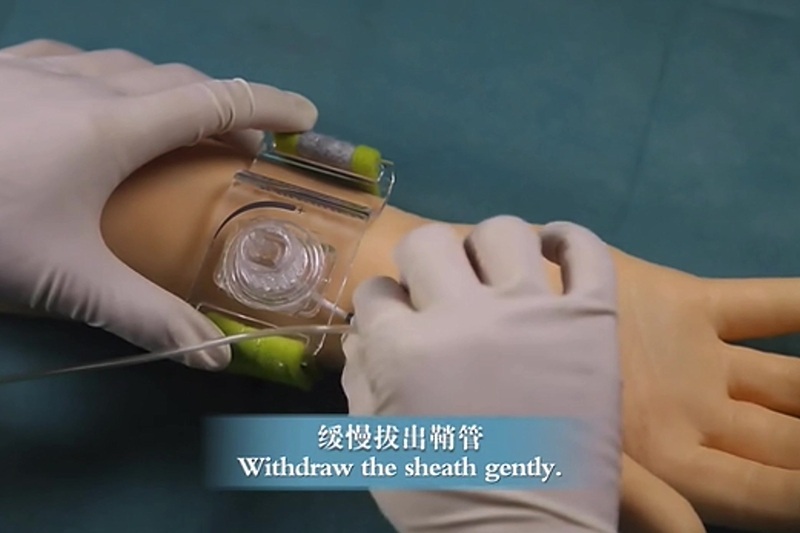
Not all compression hemostasis systems have the same effect. Choosing a suitable radial artery compression hemostatic device is crucial for reducing complications and improving clinical efficiency.
High quality products typically have the following characteristics:
Many cardiologists prefer to choose products specifically designed for postoperative catheterization hemostasis, as these devices can achieve a smoother decompression process and reduce repeated manual adjustments.
When comparing different hemostatic compression systems, hospitals should also pay attention to the following aspects:
Excessive compression remains an important cause of radial artery occlusion. Devices with precise pressure regulation capabilities can reduce unnecessary blood flow obstruction.
Simple and easy-to-use products help improve nursing efficiency and reduce training costs in busy catheterization rooms.
Soft straps and ergonomic wrist rest design can improve the wearing experience during prolonged compression.
A high-quality radial artery tourniquet can not only stop bleeding, but also help maintain vascular patency.
The core of retaining blood flow for hemostasis is to preserve the minimum forward blood flow of the radial artery while stopping bleeding. At present, this concept has been widely applied in postoperative catheter hemostasis management.
Common operational suggestions include:
Adequate doses of heparin can help reduce thrombosis. Insufficient anticoagulation is closely related to an increased incidence of radial artery occlusion.
Oppression targets do not completely close blood vessels. After installing the hemostatic compression device, the pressure should be gradually reduced until slight blood flow is restored and no significant bleeding occurs.
Regularly checking the pulse can help detect circulation problems early. Some hospitals will combine blood oxygen monitoring or ultrasound examination to confirm smooth blood flow.
Prolonged compression time increases the risk of vascular damage. Many studies support the use of shorter decompression procedures when conditions permit.
Modern interventional hemostatic devices are easier to achieve standardized decompression management compared to traditional manual compression.
The duration of compression directly affects the preventive effect of radial artery occlusion. Even with high-quality radial artery compression hemostatic devices, if the decompression process is not standardized, it may still increase the risk of occlusion.
At present, many hospitals will develop standardized deflation procedures for radial artery tourniquets. Gradual decompression can reduce recurrent bleeding and restore blood flow earlier.
Common processes include:
Standardized processes help maintain consistent operations among different doctors and nursing staff.
For patients with high bleeding risk, longer observation time may still be necessary in clinical practice, but unnecessary prolonged compression should be avoided as much as possible.
Compared to manual compression, standardized hemostatic compression systems have the following advantages:
These advantages are particularly important for high load intervention centers.
Reducing the risk of radial artery occlusion not only depends on the product itself, but also on medical training and standardized procedures.
Hospitals should establish clear standards, including:
A reliable hemostatic compression device combined with standardized training can significantly reduce differences between different operators.
Many procurement teams also focus on:
Manufacturers who can provide technical support and clinical guidance also help hospitals to efficiently complete product introductions.
With the continuous growth of global radial artery intervention therapy, how to reduce radial artery occlusion and protect long-term vascular access has become a key direction in the industry.
Reducing the risk of radial artery occlusion is not just about achieving simple hemostasis. Reasonable use of radial artery compression hemostatic devices, standardized decompression time, and adoption of blood flow preservation hemostasis techniques all contribute to safer postoperative catheter hemostasis management.
Modern radial artery tourniquets and interventional hemostatic devices can better balance hemostatic effects and vascular patency compared to traditional manual compression methods.
If your team is evaluating a hemostatic compression system solution suitable for radial artery intervention surgery, it is recommended to have in-depth communication with manufacturers with clinical experience to further improve clinical efficiency, patient comfort, and long-term vascular management effectiveness.
| Theme | key information |
| main reason | Excessive oppression |
| Best prevention method | Maintain blood flow to stop bleeding |
| Recommended equipment | Adjustable compression system |
| Important operation | Gradually reduce pressure |
| Process advantages | Reduce nursing burden |
| Clinical objectives | Keep blood vessels unobstructed |
Radial artery occlusion:Radial artery occlusion after radial artery intervention surgery.
Retaining blood flow to stop bleeding:A hemostatic method that maintains partial blood flow while stopping bleeding.
Radial artery tourniquet:A wrist device used for compression hemostasis after radial artery surgery.
Postoperative catheter hemostasis:The process of hemostasis management after catheter removal.
Interventional hemostatic device:A medical device used to control bleeding after vascular intervention surgery.
 Phone: 0755-82624909
 Email: info@risingmedical.com.cn
 Address: Room 503 and 603, Building 1, Shenzhen Biomedical Innovation Industrial Park, No. 14, Jinhui Road, Jinsha Community, Kengzi Street, Pingshan District, Shenzhen City


Scan add
Business manager


 Your location: