Welcome to Shenzhen Rising Medical Co., Ltd.  中文
中文
中文 中文

News
Date:2026-05-22 Click: 590
In the past few years, radial artery access has become increasingly common in catheterization laboratories worldwide. Compared with traditional femoral artery approach, radial artery intervention usually reduces the risk of bleeding, helps patients recover activity earlier, and improves postoperative comfort.
With the increasing number of interventional surgeries, more and more hospitals are rethinking the management of hemostasis after catheter removal. In many intervention centers, traditional artificial compression is gradually being replaced by modern hemostatic compression devices. The radial artery compression device and other postoperative hemostasis systems are helping doctors establish a more standardized recovery process and improve the overall efficiency of the catheterization laboratory.
Nowadays, the focus of medical institutions is no longer just on stopping bleeding itself. The quality of patient recovery, nursing workload, and overall process efficiency have also become increasingly important issues.
For many years, artificial compression has been a common method of hemostasis after vascular angiography and interventional procedures. This method is easy to operate and does not require additional equipment. But as the number of interventional surgeries continues to increase, the limitations of traditional artificial compression are becoming increasingly apparent.
One of the most common problems is unstable pressure control. Even when facing similar surgeries, the pressure exerted by different medical staff may vary. Excessive pressure may affect blood flow and increase the risk of radial artery occlusion; Insufficient pressure may lead to bleeding or hematoma.
In busy clinical environments, artificial compression requires nursing staff to continuously observe patients, which undoubtedly further increases the pressure of nursing work.
Nowadays, more and more hospitals are seeking solutions that can achieve the following goals:
This is also one of the important reasons for the continuous growth in demand for modern hemostatic compression devices.
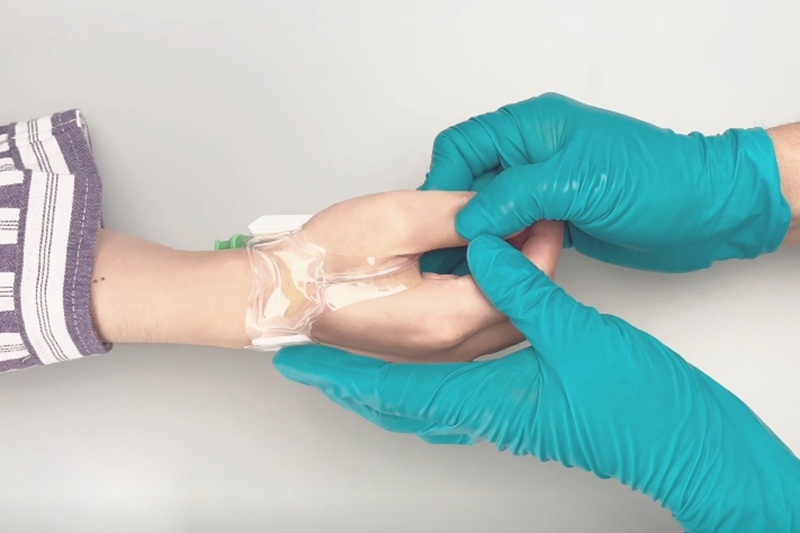
With the increasing popularity of radial artery intervention, hospitals' requirements for postoperative recovery management are also constantly improving. Modern radial artery compression devices can provide more stable and reproducible pressure control compared to traditional artificial compression.
Many doctors prefer to use device based hemostasis because it can simplify the recovery management process after removing the sheath. The adjustable inflation system can help medical staff gradually reduce pressure while continuously observing the puncture site.
Another important advantage is process consistency. In high flow catheterization rooms, standardized recovery procedures help reduce operational differences among different healthcare professionals.
In recent years, more and more hospitals have begun to introduce advanced radial artery hemostasis equipment to help achieve:
This trend is particularly evident in medical institutions where day surgery programs are rapidly developing.
Patient safety has always been one of the important reasons for hospitals to shift from manual compression to equipment based hemostasis.
Nowadays, more and more doctors are paying attention to the concept of "unobstructed hemostasis". Compared to completely blocking blood flow, modern hemostasis management places more emphasis on controlling bleeding while maintaining arterial blood circulation as much as possible.
Modern postoperative hemostatic devices are designed around this concept. Compared to traditional manual compression, this type of equipment can achieve more precise pressure regulation throughout the entire recovery process.
Many hospitals have gradually observed some practical changes after introducing modern interventional hemostatic equipment:
In addition, the transparent structure design also makes it easier for medical staff to observe the recovery of the puncture site without the need to repeatedly disassemble the equipment.
With the continuous growth of global radial artery intervention, reliable vascular closure devices have become an important component of modern interventional therapy.
Nowadays, more and more catheterization rooms are facing pressure to improve efficiency. On the one hand, the number of interventional surgeries continues to increase; On the other hand, personnel allocation may not necessarily increase synchronously.
This is also an important reason why more and more intervention teams are starting to reduce the use of manual oppression.
In manual compression mode, nursing staff usually need to spend a lot of time observing patients. And device based hemostasis has changed this process. A well-designed hemostatic compression device can help hospitals establish a more stable recovery management mode while reducing unnecessary process delays.
In practical clinical settings, this can often help hospitals:
Some medical institutions also use advanced femoral artery compression systems for hemostasis management after femoral artery intervention, thereby establishing a more unified vascular closure process.
For many catheterization labs, the focus now is not just on "completing hemostasis", but on how to achieve safer and more efficient overall recovery management.
The future vascular management technology is likely to develop towards a more intelligent, standardized, and patient-centered direction.
Manufacturers are continuously improving interventional hemostatic devices, including more precise pressure control, better patient comfort, and more convenient clinical procedures. Some new products have even begun exploring digital monitoring functions to help doctors achieve more accurate pressure management in the future.
At the same time, the healthcare system is increasingly emphasizing:
As these trends continue to develop, the market demand for advanced hemostatic compression devices is expected to continue to grow.
To some extent, artificial compression is gradually being replaced by device based hemostasis, which is actually part of the overall upgrade of modern healthcare. Nowadays, hospitals are not only concerned with the success rate of surgeries, but also pay more attention to operational efficiency, nursing management, and patient recovery experience.
The transition from manual compression to modern hemostatic compression devices represents an important development trend in the field of interventional therapy. With the continuous growth of global radial artery intervention, hospitals' requirements for recovery efficiency, patient comfort, and standardized hemostasis management are also constantly increasing.
Nowadays, advanced radial artery compression devices are helping medical institutions improve postoperative safety while reducing the pressure of nursing work in busy catheterization rooms.
For medical institutions, distributors, and healthcare companies evaluating vascular intervention products, choosing reliable hemostatic solutions not only helps improve clinical performance but also enhances long-term operational efficiency. With the increasing demand for minimally invasive interventions, device based hemostasis management will play a more important role in clinical practice in the future.
| Theme | key information |
| Radial artery intervention for growth | Global applications continue to increase |
| The issue of artificial oppression | Lack of stability and labor-intensive |
| Equipment advantages | Pressure control is more stable |
| patient benefit | Restore more comfort |
| Influence of catheterization room | Improve overall work efficiency |
| industry trends | The demand for equipment based hemostasis is increasing |
Smooth hemostasis:The method of maintaining smooth arterial blood flow while controlling bleeding.
Radial artery occlusion:The situation of radial artery blockage after catheterization.
Radial artery compression device:A device used for controlling bleeding after radial artery intervention surgery.
Hemostasis after catheterization:The process of hemostatic management after catheter intervention.
Interventional hemostatic equipment:A medical device used for assisting hemostasis after vascular intervention surgery.
 Phone: 0755-82624909
 Email: info@risingmedical.com.cn
 Address: Room 503 and 603, Building 1, Shenzhen Biomedical Innovation Industrial Park, No. 14, Jinhui Road, Jinsha Community, Kengzi Street, Pingshan District, Shenzhen City


Scan add
Business manager


 Your location: